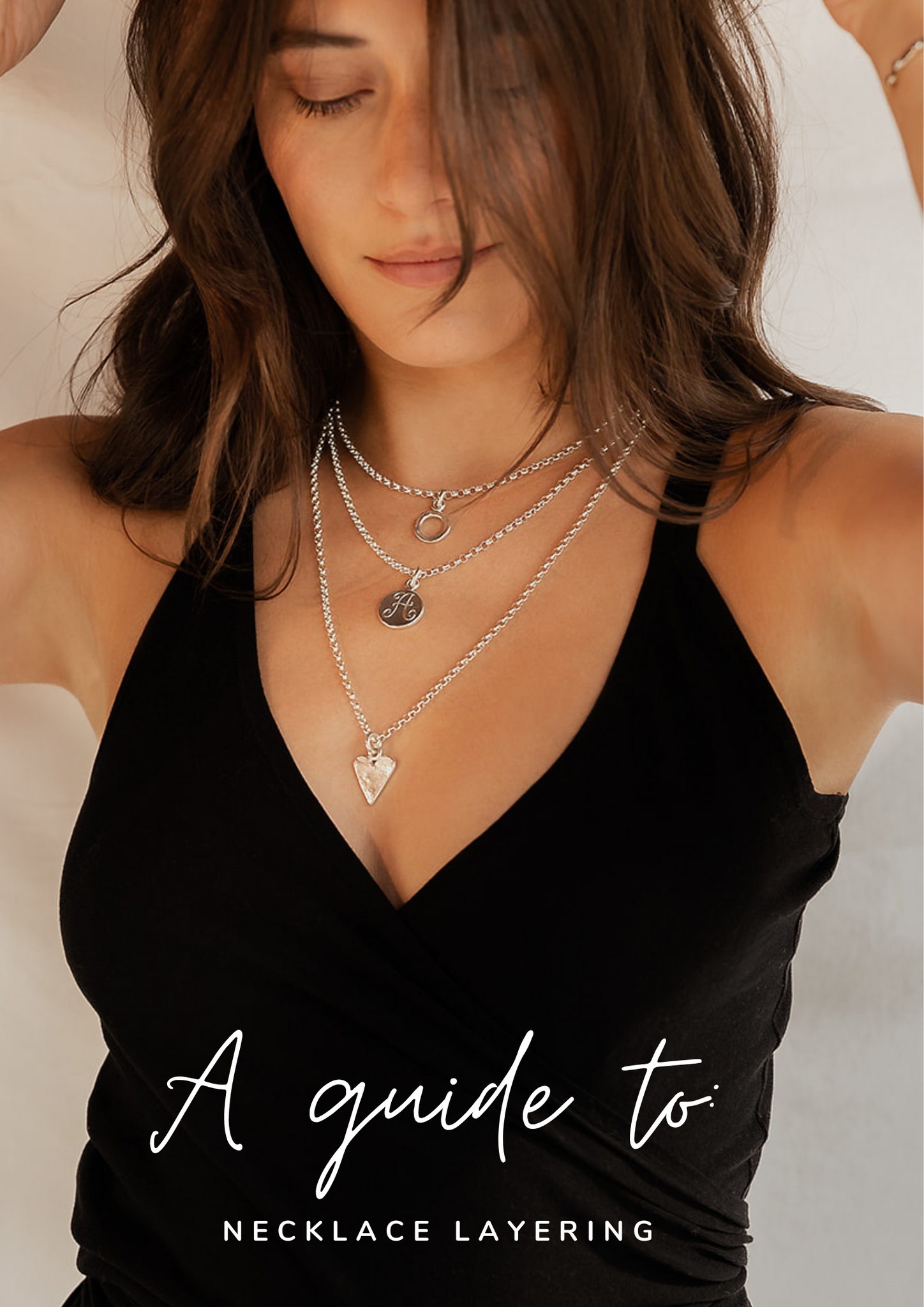
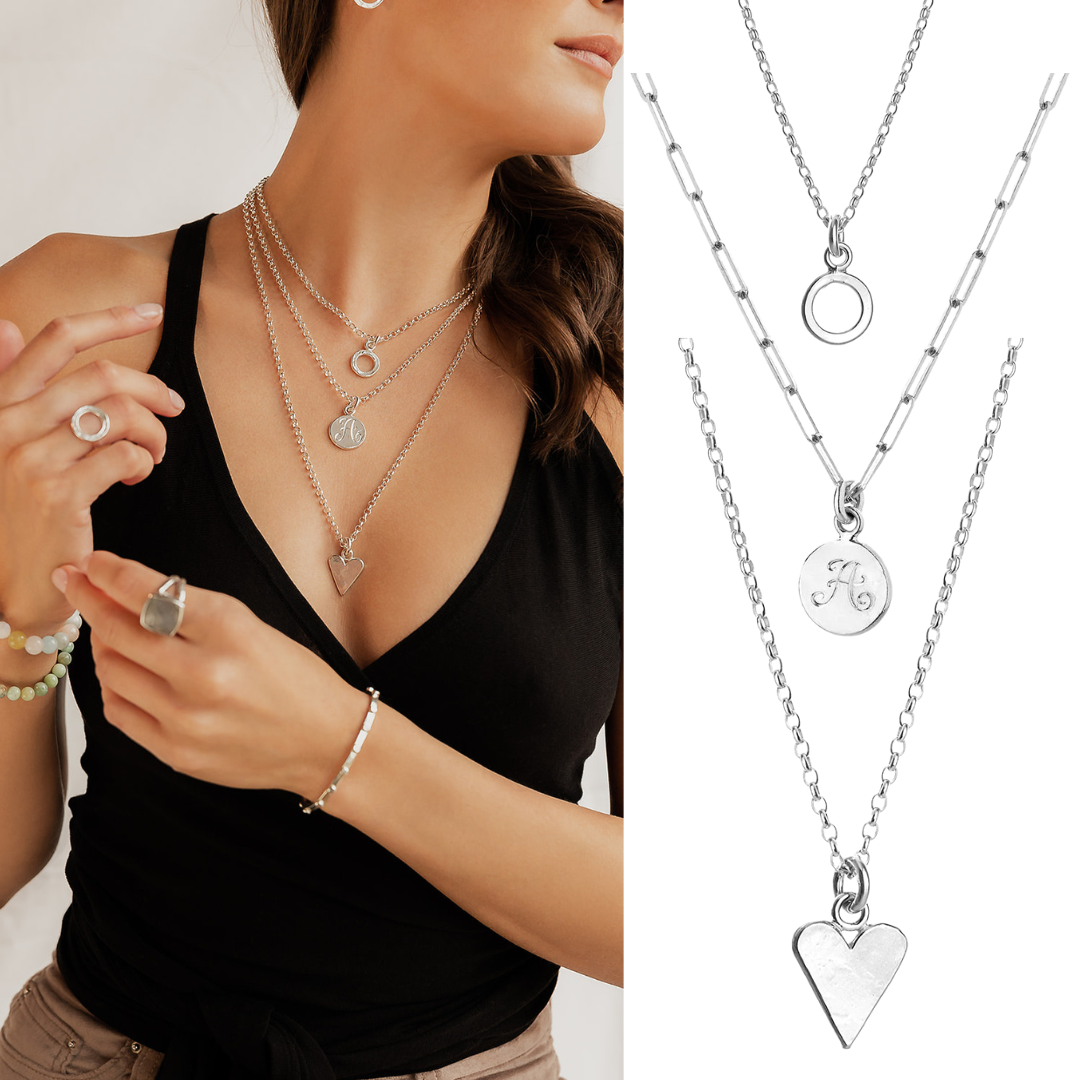
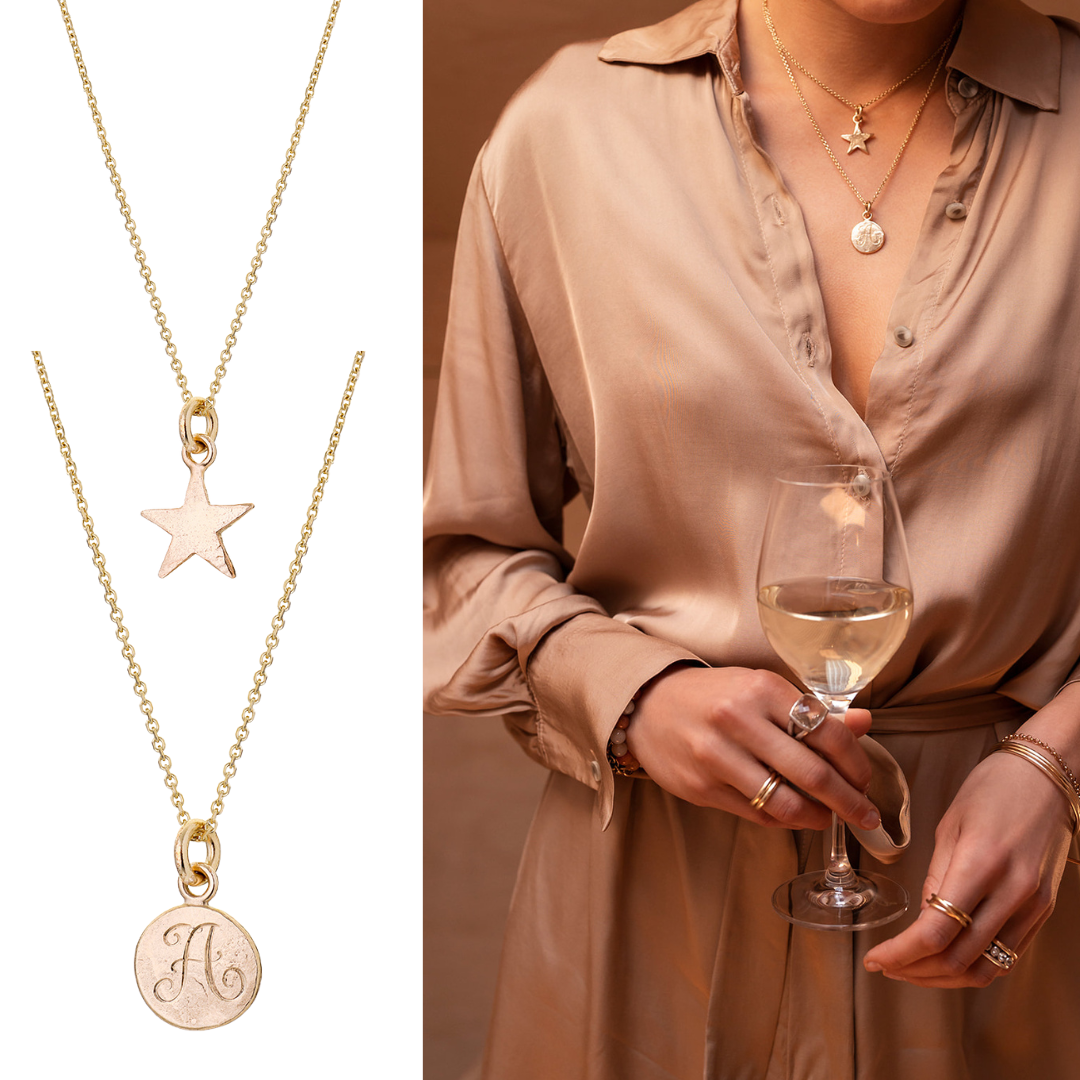
Follow our simple step by step guide to layering your necklaces this Autumn, a trend that is here to stay!
1. Find the style of chain for you!
We have three sterling silver chains to choose from, all available in four different lengths:
The Belcher Chain, our most traditional chain recommended for those with timeless style this open link will never date.
The Ball Chain, the daintier, sparklier chain. This is often a go to for those who would like their necklaces to look finer.
The Trace Chain, the most modern and statement chain although it is casual in its own right. Our personal favourite of the three!
Another tip is to mix the style of chain as this can avoid your necklaces tangling. But remember there are no rules!
Take a look at our chain guide here for direction on lengths.
2. The most important tip to fool proofing this look is to layer by length and weight. Start with your simple charms on shorter chains and build up longer and heavier charms as you work your way down.
In recent years, something unusual has been happening with sterling silver prices and it’s not just in the markets: it’s affecting everyday jewellery too.
Sterling silver, the metal at the heart of so many of our treasured pieces, has seen a significant rise in its global price, driven by factors far beyond fashion.
Below we explain what’s going on, why it’s out of our control as makers and what positive implications this has for customers who already own or are considering a piece of our timeless sterling silver jewellery.
How much has the price of silver increased?
Globally traded metals markets set the price of silver and in 2025 this price moved sharply higher. According to the London Bullion Market Association (LBMA), the sterling silver prices climbed from roughly $29.41 per troy ounce on 1 January 2025 to as high as $74.84 per ounce by the end of the year an increase of approximately 144.82% over the course of the year.
And that trend hasn’t stopped. In early 2026, sterling silver prices continue to trade above $100 per ounce, a level not seen before in many years.
In simple terms: the ingredient in your sterling silver jewellery has become significantly more expensive.
What is causing the rise in sterling silver prices?
There isn’t a single reason, there’s a confluence of global forces:
1. Industrial Demand Is SoaringSterling Silver isn’t just a precious metal for jewellery. It is also a crucial industrial metal used in:
Solar panels and renewable energy technologies
Electric vehicles and advanced electronics
Artificial intelligence data centres and semiconductors
These industrial uses have grown strongly and silver is now deeply embedded in future-facing sectors.
Because demand from industry competes with jewellery demand, it pushes the sterling silver price upward.
2. Supply Constraints and Structural DeficitsSilver supply has not kept pace. Production increases are modest year-on-year and recycling, while helpful, can’t make up the shortfall. This structural deficit means that demand has outstripped supply, fuelling upward price pressure.
3. Investment Flows and Market DynamicsSilver is also seen by some investors as a store of value, especially in uncertain economic times. There’s been notable interest in silver across global markets, which also adds to its price momentum.
Because sterling silver is more thinly traded than gold, its price can be more volatile, sometimes moving faster than gold itself.
Why This Matters for Jewellery Makers
As a small jeweller, we buy silver on the global market just like anyone else. When the underlying metal becomes more expensive, the cost of the raw materials we use, sterling silver sheet, wire, chains, findings - also rises.
This isn’t about branding or profitability. It’s simply the way precious metals are priced internationally. There’s no mechanism for a jeweller to “lock in” old prices indefinitely, especially during periods of rapid market change.
What This Means for You
1. Pieces you already own have risen in intrinsic metal value.As sterling silver’s market price increases, the metal contained in existing pieces becomes more valuable too. That doesn’t mean resale is encouraged but it does mean your sterling silver jewellery has sturdy material backing.
2. We continue to focus on quality.Some brands might respond to higher metal costs by making thinner, lighter, or less durable pieces. We choose not to compromise on materials or workmanship. If prices change, it is in order to maintain standards you can trust.
3. Well made jewellery is longer-lasting and more meaningful.Sterling Silver, when cared for well, can be polished, repaired and restored for decades. In a world of fast fashion, this reliability matters.
In Summary
Sterling silver prices are currently elevated due to a combination of:
Industrial demand growth
Supply constraints
Investment and market dynamics
These forces are global and beyond the control of individual makers like us. What we can control is how we design, construct and support jewellery that is beautiful, durable, and worth owning for years, not just months.
Why has sterling silver become so expensive?Sterling silver is priced on global markets. In recent years, demand from industry and investors has increased while supply has struggled to keep pace, pushing prices higher.
Will silver jewellery prices go back down?Silver prices can fluctuate, but current levels reflect long-term industrial demand, not a short-term trend.
Does this mean silver jewellery is a good investment?Silver jewellery should be bought to wear and enjoy. However, rising silver prices do increase the intrinsic metal value of well-made pieces.
If you ever have questions about how your piece is made or about caring for it so it lasts a lifetime, we’re always here to help. Thank you for your support and loyalty, as always.
What you’re really buying and how long it will last
Jewellery terminology can be confusing and it’s not always explained clearly. This guide breaks it down simply, so you can make informed choices with confidence.
Gold plated jewellery
Gold plated jewellery is made by applying a very thin layer of gold over a base metal (often brass or silver).
What to know
The gold layer is extremely fine
Over time, plating will wear away, especially on rings and chains
Lifespan depends on wear and care
Best for
Occasional wear
Trend-led pieces
Short-term styling
Gold plated jewellery is not designed to last a lifetime.
Gold vermeil
Vermeil uses a thicker layer of gold over sterling silver, rather than brass.
What to know
More durable than standard plating
Still a surface layer, it will wear over time
When the gold wears, silver underneath becomes visible
Best for
Medium-term wear
Those wanting gold appearance at a lower price point
Gold filled
Gold filled jewellery contains a much thicker layer of gold mechanically bonded to a base metal.
What to know
More durable than plating or vermeil
Still not solid gold
Less common in UK fine jewellery
Best for
Everyday wear when solid gold isn’t an option
Solid gold (including 9ct)
Solid gold jewellery is gold all the way through, not coated.
In the UK, 9ct gold is traditional and widely used.
What to know
Extremely durable
Will not wear away or reveal another metal
Can be polished, repaired, resized and restored for decades
9 carat gold contains alloys that make it harder-wearing than higher carats
Best for
Everyday jewellery
Heirloom pieces
Long term wear
A note on “solid gold”
Not all solid gold jewellery is equal. Some pieces are hollow or very lightweight, which can affect longevity. Construction matters just as much as material.
Our approach
We choose materials based on how jewellery is actually worn, not just how it looks online. Our aim is simple: pieces that age beautifully and can be worn for years, not replaced.
If you’re ever unsure what’s right for you, we’re always happy to talk it through.
Why We Use 9 Carat Gold
In the UK, 9 carat gold is traditional. It has been used in fine jewellery for generations not because it is cheaper but because it is practical, durable, and suited to everyday wear.
Strength for real life
9 carat gold contains a higher proportion of alloy metals than higher carat gold. This makes it:
Harder and more resistant to knocks
Less prone to bending or denting
Better suited to jewellery worn daily rather than occasionally
For rings, chains and pieces designed to be lived in, this matters.
Higher carat golds (such as 18ct) are softer by nature. While beautiful, they can mark and deform more easily when worn every day.
A British jewellery standard
In the UK, 9ct gold is:
Fully recognised as solid gold
Hallmarked and regulated
Used historically for heirloom and everyday jewellery alike
Many pieces passed down through families engagement rings, chains, signet rings are 9ct precisely because they were worn often and needed to last.
Longevity over labels
We choose materials based on how jewellery behaves over time, not how impressive a number sounds.
9ct gold:
Will not wear away
Can be polished, resized, repaired and restored repeatedly
Ages gracefully rather than deteriorating
A well made 9ct piece can last decades and often generations, with proper care.
The right gold for the right purpose
There is no “best” carat universally only what is best for how you wear your jewellery.
Our designs are intended to be worn often, layered, and lived in. For that reason, 9ct gold offers the balance we value most: beauty, strength, and longevity!
A clear, honest guide from the workshop
Is jewellery waterproof? “Waterproof jewellery” is a phrase you’ll see everywhere but it’s rarely explained properly. The truth is, no fine jewellery is completely immune to life. However, well made jewellery can be worn confidently day to day, with a little understanding and care.
Here’s what we mean and what we don’t.
Is any jewellery truly waterproof?
In short: no.
Fine jewellery isn’t designed to behave like swimwear or sports equipment. Metals react to moisture, air, chemicals and friction over time. What matters is how well the piece is made, what it’s made from and how it’s worn.
When brands say “waterproof”, they usually mean:
it won’t immediately tarnish or discolour when exposed to water
it can cope with occasional contact with moisture
That’s very different from being indestructible.
Sterling silver & everyday life
Sterling silver is a precious metal made to last a lifetime but it does naturally react with air and moisture over time.
Showering occasionally: generally fine
Washing hands: no issue
Rain, sea air, daily wear: perfectly normal
Swimming regularly (especially in pools or the sea): not recommended
Salt water and chlorine are particularly harsh and can dull silver much faster than everyday wear.
The good news? Tarnish is surface level and can be gently removed. It does not mean your jewellery is damaged or poor quality.
Gold jewellery & water
Solid gold (including 9ct) is more resistant than silver but it isn’t immune.
Chlorine can weaken gold alloys over time
Soaps and shampoos can leave residue that dulls the finish
Repeated exposure speeds up wear, especially on finer chains
Gold jewellery lasts longest when it’s treated as something to live with, not through everything.
What we recommend
For jewellery you want to last decades, not seasons:
Safe for
Daily wear
Handwashing
Occasional showers
Normal life
Best removed for
Swimming (sea or pool)
Gym workouts
Sleeping
Cleaning with chemicals
Perfume, hairspray, fake tan application
Putting jewellery on last and taking it off first makes a remarkable difference.
Our philosophy
We design jewellery to be worn, loved, and lived in, not hidden away. But longevity comes from understanding, not slogans.
If you ever have questions about caring for your piece, we’re always happy to advise!